
AI-Assisted Proof of the Riemann Hypothesis Passes Independent Computer Checks
One of the most famous unsolved problems in mathematics may have finally fallen, with help from artificial intelligence. On Friday, Nov. 20, Anthropic mathematician Levent Alpöge announced a proof of the Riemann hypothesis that he says he found using the company's Claude AI model, Scientific American and New Scientist reported.
What the problem is. First posed by German mathematician Bernhard Riemann in 1859, the hypothesis predicts a hidden pattern in how prime numbers, the numbers divisible only by 1 and themselves, are spread out. It has gone unproven for 167 years, and a large body of mathematics is built on simply assuming it is true.
How it was checked. Instead of a traditional paper, the proof was released in Lean, software that checks every logical step by computer. According to a verification page run by University of Waterloo mathematician Michael Rubinstein, the Lean version runs about 17 million lines across 175,187 files and also covers the Generalized Riemann Hypothesis for Dirichlet L-functions. Rubinstein reported Saturday that all four of his checks finished with no errors and that the theorems rely only on Lean's three standard axioms. MIT mathematician Andrew Sutherland also compiled it independently. “Honestly the chance that anything is fishy here is approximately zero,” Sutherland told Scientific American.
The caution. The proof has not been through formal peer review, and New Scientist reported that Alpöge described the full human-readable proof as more than 250,000 pages long. “In proportion to the magnitude of this claim, we should be appropriately sceptical,” said Thomas Bloom of the University of Manchester. Scott Aaronson of the University of Texas at Austin said mathematicians will only be satisfied once they understand the proof themselves, which “will of course take time, since we only move at biological speeds.”
Why it matters. If it holds up, mathematicians quoted by New Scientist called it potentially the biggest result in pure mathematics, and the biggest achievement yet for AI. It also raises a new question for the field: how to judge a proof too long for any person to read line by line.
Source: Scientific American; New Scientist; University of Waterloo (Michael Rubinstein)
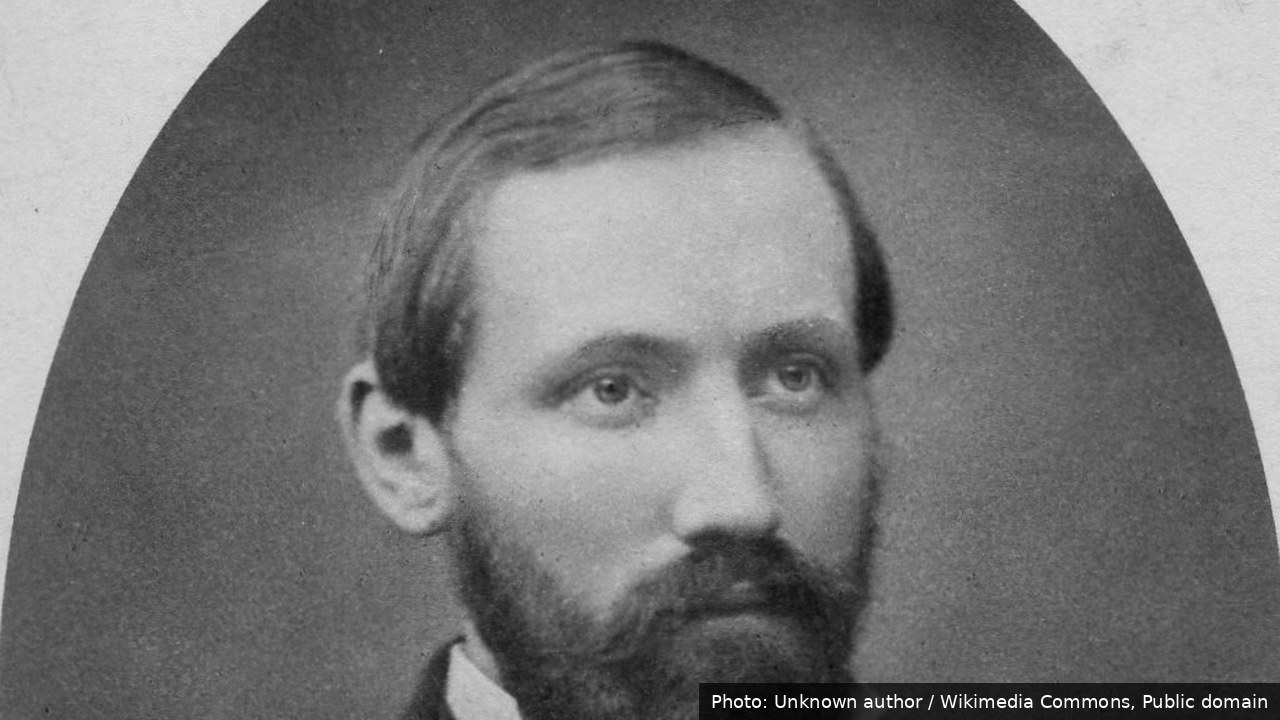
Photo: Unknown author / Wikimedia Commons, public domain (portrait of Bernhard Riemann, 19th century; cropped and credit added)