
A Costly Exercise in Partisanship: How the January 6 Select Committee Spent Millions of Taxpayer Dollars
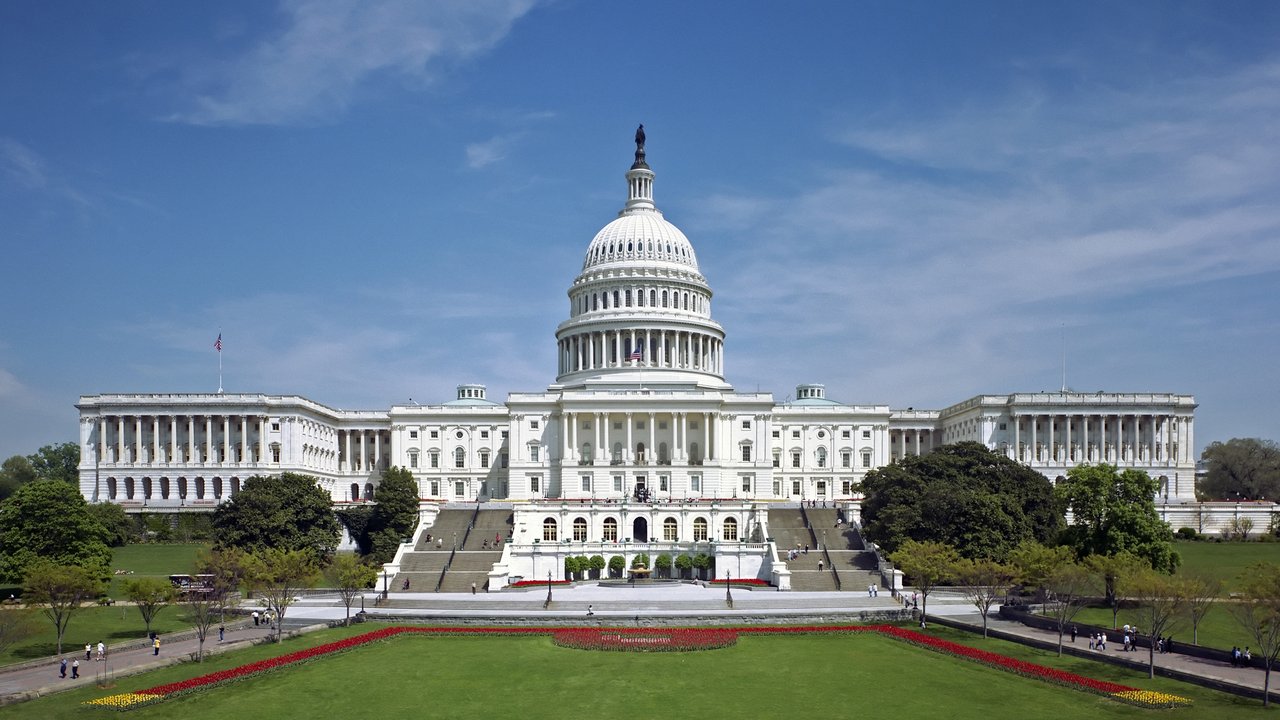
Photo: Architect of the Capitol / Wikimedia Commons, public domain (west front of the United States Capitol; cropped)
From the desk of Jim McCarty
An Examination of Costs, Structure, Evidence Handling, and Political Bias
Introduction
The House Select Committee to Investigate the January 6th Attack on the United States Capitol operated for roughly 18 months and ultimately cost American taxpayers approximately $17.4 million—nearly double earlier public projections of around $9.3 million. While investigating the events of January 6, 2021, was a legitimate subject of congressional inquiry, the manner in which the committee was formed, structured, staffed, and conducted its work raises serious questions about whether this expenditure represented a responsible use of public funds or a partisan political project.
This article examines the financial cost of the committee, the partisan nature of its creation and composition, concerns about selective presentation of evidence, and why many Americans view the entire effort as a waste of taxpayer resources.
The Price Tag: Nearly $17.4 Million
According to reviews of U.S. House disbursement records, the Select Committee spent approximately $17.4 million. This figure significantly exceeded the roughly $9.3 million budget figure reported by some outlets earlier in the process. For context, the median annual budget for a typical House committee is around $6 million. The January 6 panel’s spending was therefore exceptionally high for a temporary select committee.
A substantial portion of the funds went to personnel, outside contractors, consultants, transcription services, digital forensics, and—notably—television producers and documentary filmmakers. Critics argued that hiring media professionals to shape dramatic video presentations indicated the committee prioritized narrative construction and primetime television impact over traditional fact-finding and balanced oversight.
When compared with previous high-profile congressional investigations, the expenditure stands out. The Select Committee on Benghazi, for example, operated under a different funding structure and spent far less. The January 6 committee’s willingness to spend at this level, combined with its heavy investment in production values, fueled the perception that the investigation was designed as much for political messaging as for legislative insight.
A Fundamentally Partisan Creation
The Vote Record on H. Res. 503
The resolution establishing the Select Committee, H. Res. 503, passed the House on June 30, 2021, by a vote of 222 to 190. The breakdown was starkly partisan:
• Every voting Democrat supported the resolution (220 yes).
• Only two Republicans voted yes: Representatives Liz Cheney of Wyoming and Adam Kinzinger of Illinois.
• 190 Republicans voted no.
This near-party-line result reflected the collapse of earlier efforts to create a bipartisan, independent commission modeled on the 9/11 Commission. After Senate Republicans blocked that approach, House Democrats proceeded with a select committee structured entirely under their control.
Composition and Appointment Process
Speaker Nancy Pelosi appointed all members of the committee. Although House rules and tradition ordinarily provide for meaningful minority-party participation and the appointment of a ranking member by the minority leader, the January 6 Select Committee operated without a traditional ranking member from the Republican conference. Instead, the two Republicans who served—Cheney and Kinzinger—were themselves critics of former President Trump and had been selected by the Democratic leadership. Cheney was named vice chair.
This structure meant there was no formal minority staff allocation, no minority subpoena authority, and no institutional check on the majority’s narrative. Critics, including later Republican oversight efforts, argued that the committee violated longstanding House norms regarding bipartisan participation in investigative bodies.
Selective Evidence Presentation
One of the most significant criticisms of the committee concerns how it handled and presented evidence. A prominent example involves the testimony of Cassidy Hutchinson, a former aide to White House Chief of Staff Mark Meadows, and the subsequent contradictions from Secret Service personnel.
Hutchinson’s public testimony included a dramatic second-hand account that President Trump had lunged for the steering wheel of the presidential vehicle and toward a Secret Service agent when told he would not be taken to the Capitol. This story became one of the most memorable moments of the televised hearings.
However, later-released transcripts showed that the Secret Service driver of the vehicle and other personnel contradicted key physical details of that account. The driver testified that Trump never grabbed the steering wheel and did not lunge into the front seat. Anthony Ornato, the official Hutchinson said had told her the story, testified that he had never recounted such an incident and first heard the claim during Hutchinson’s public appearance.
Moreover, the driver’s attorney stated that the agent had offered to testify under oath in the summer of 2022—shortly after Hutchinson’s public testimony—but was not brought in until months later. The Select Committee did not prominently feature these firsthand contradictions during its high-profile hearings. Republican investigators later characterized this as selective presentation of evidence designed to support a predetermined narrative.
Additional concerns raised in subsequent oversight reports include back-channel communications between Vice Chair Liz Cheney and Hutchinson (via encrypted messaging and an intermediary) around the time Hutchinson changed lawyers and expanded her testimony, as well as questions about the completeness of the public record the committee left behind.
Why Many View This as a Waste of Taxpayer Dollars
Several factors contribute to the conclusion that the January 6 Select Committee represented a poor use of public resources:
1. Lack of bipartisanship from the start. A 222–190 party-line vote and the exclusion of meaningful Republican participation undermined the committee’s claim to institutional legitimacy. Serious investigations into national security failures or attacks on democratic institutions have historically sought broad buy-in across party lines.
2. Emphasis on television production over traditional oversight. Spending significant sums on producers and filmmakers to craft dramatic presentations suggested the primary audience was the viewing public and the media, not the legislative process or the historical record.
3. Selective use of evidence. When dramatic claims were later contradicted by firsthand witnesses whose accounts the committee possessed but did not highlight, public trust in the integrity of the process eroded.
4. Limited legislative output relative to cost. While the committee produced a lengthy final report and numerous hours of hearings, it generated relatively little new statutory reform. Much of the work duplicated existing criminal investigations already underway at the Department of Justice.
5. Opportunity cost. Seventeen-plus million dollars could have been directed toward Capitol security improvements, support for injured law enforcement officers, or other pressing legislative priorities.
Conclusion
The events of January 6, 2021, warranted thorough examination. Violence at the Capitol, injuries to law enforcement, and the disruption of the electoral count were serious matters. However, the vehicle chosen to conduct that examination—a select committee formed on a near-party-line vote, structured to exclude traditional minority participation, staffed and funded at a high level, and oriented toward high-production televised hearings—invited legitimate criticism that politics, rather than impartial fact-finding, was the driving force.
At a cost of approximately $17.4 million, the American people funded not only an investigation but also a sustained political messaging campaign. Subsequent revelations about evidence handling and the partisan architecture of the committee have only reinforced the view, held by many, that this was a costly and avoidable exercise in political theater rather than a model of responsible congressional oversight.
Future investigations of comparable magnitude would better serve the public by adhering to traditional norms of bipartisanship, transparency in evidence presentation, and fiscal restraint.
Note on Sources: Cost figures are drawn from reviews of U.S. House disbursement records reporting approximately $17.4 million in total spending. Vote totals for H. Res. 503 are from the official House Clerk roll call (222–190). Details regarding witness interviews and evidence presentation are based on publicly released transcripts and subsequent congressional oversight reports.