
Democrats Secure a Majority of U.S. Governorships After Midterm Sweep
Democrats will hold a majority of the nation's governorships after Tuesday's midterm elections, according to results tallied by major U.S. news organizations on Thursday. As of the latest counts, Democrats controlled 28 governors' offices compared with 20 for Republicans, with two races still uncalled. The outcome reverses the 26-24 Republican edge that existed heading into Election Day and marks the first time Democrats have held a majority of governorships since 2010, according to reporting tied to the Associated Press tally.
U.S. media reported that Democrats flipped Republican-held governors' seats in Georgia, Texas, Ohio and Iowa, with some outlets also counting a flip in Nevada. In Georgia, Democrat Keisha Lance Bottoms defeated Republican Rick Jackson, ending more than two decades of Republican control of that office and becoming the first Black woman elected governor of a U.S. state, according to Anadolu Agency's roundup of U.S. media reports. In Texas, Democrat Gina Hinojosa defeated incumbent Republican Gov. Greg Abbott, ending three decades of Republican control and becoming the state's first Latina governor, those reports said.
In Ohio, Amy Acton defeated Republican Vivek Ramaswamy, and Rob Sand won in Iowa. Democrat Deb Haaland won New Mexico's governorship and was reported as the first Native American woman elected governor in U.S. history, while David Crowley became Wisconsin's first Black governor. Republican Byron Donalds retained Florida's governorship for his party. Two races, including Alaska's open contest to replace a term-limited Republican, remained undecided as ballots continued to be counted.
Governors oversee state agencies, sign or veto legislation and shape policy on public safety, education, health care, immigration and elections. The Democratic gains expand the party's influence in state capitals even where Republicans still control legislatures, and they broaden the party's bench of statewide executives ahead of the 2028 presidential cycle. The shift could also intensify conflicts between Democratic governors and the Republican-led federal government over immigration enforcement, environmental rules, education policy and federal funding.
The gubernatorial results landed alongside a Democratic sweep of Congress. Democrats captured the House and Senate in the same midterms, setting up unified Democratic control of Capitol Hill when the new Congress convenes in January. House Democratic Leader Hakeem Jeffries is positioned to become speaker. Analysts cautioned that a majority of governorships does not automatically mean unified Democratic control of state governments, because legislative majorities and other statewide offices will continue to limit or expand what governors can do in each state.
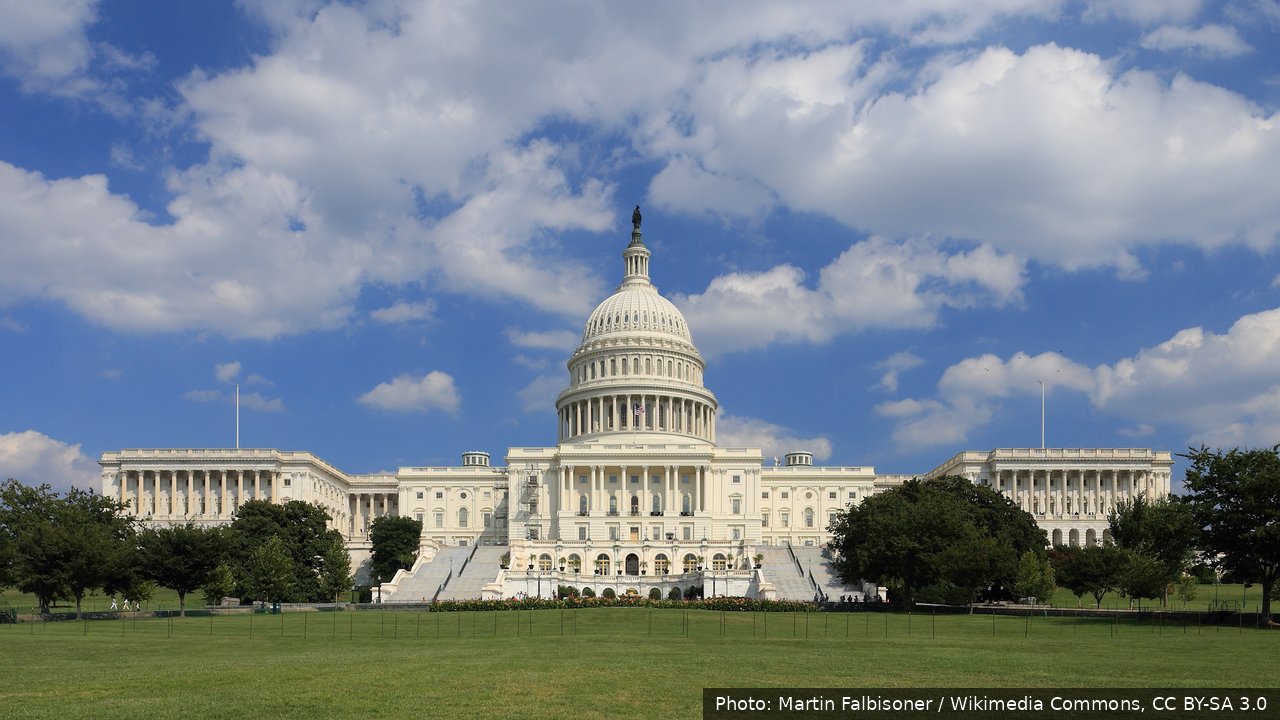
Photo: Martin Falbisoner / Wikimedia Commons, CC BY-SA 3.0