
NASA's Swift Observatory Reenters Atmosphere After 22 Years in Orbit
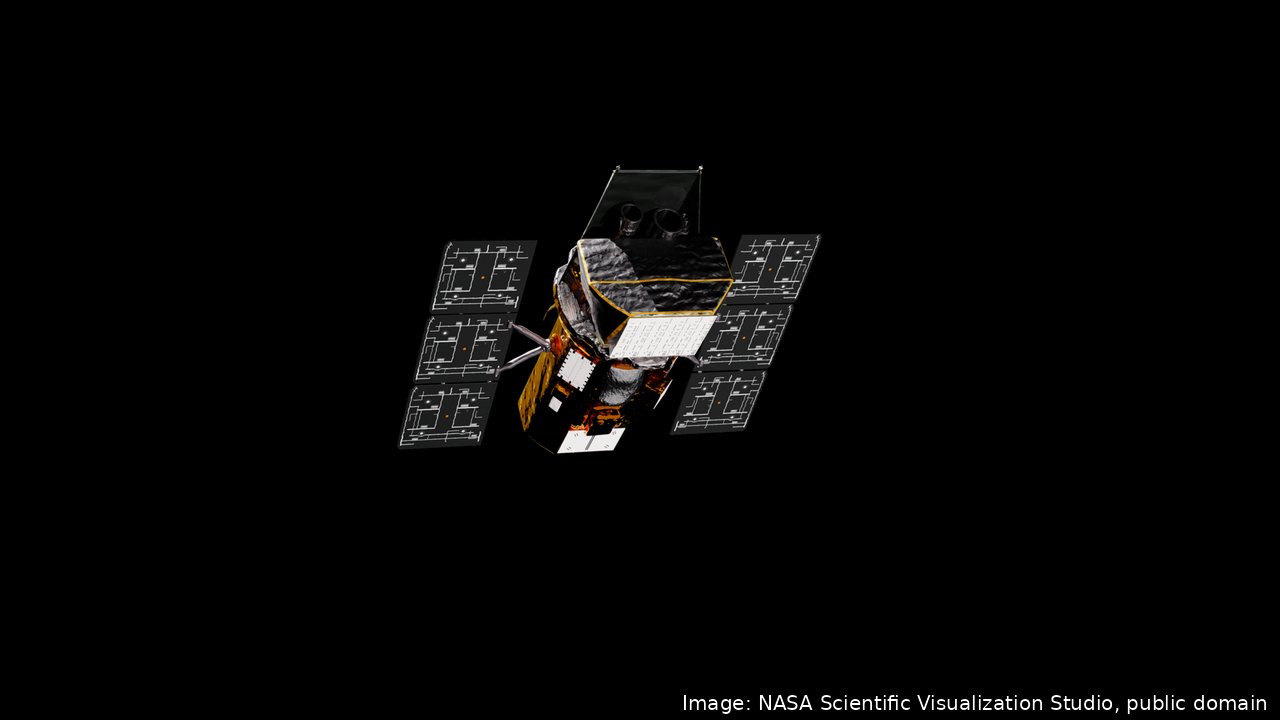
NASA's Neil Gehrels Swift Observatory fell back to Earth on Wednesday, ending one of the agency's longest-running astronomy missions. The U.S. Space Force confirmed the spacecraft reentered the atmosphere at about 7:39 a.m. EST over North Sumatra, Indonesia.
NASA said most of the observatory was expected to burn up during reentry, though some components may have survived to reach the surface. The agency had estimated the risk of anyone on the ground being harmed at about 1 in 2,100.
Swift launched on November 20, 2004, aboard a Delta II rocket on a mission designed to last two years. Built to catch gamma-ray bursts, the most powerful explosions in the universe, the observatory went on to detect more than 2,000 of them and observe more than 1,400 supernovae. Its data contributed to roughly 7,000 scientific papers, according to NASA and Spaceflight Now.
The spacecraft's orbit had been decaying faster than expected because of increased solar activity, which heats and expands Earth's upper atmosphere and adds drag on satellites. In an effort to extend the mission, NASA awarded Katalyst Space a contract worth about $30 million to build a robotic servicing vehicle that would attach to Swift and boost it to a higher orbit. That vehicle launched on July 3, but it lost attitude control, and the planned capture was called off on August 19.
With no way to raise its orbit, Swift made its final science observation on October 20, when it was about 171 miles above Earth. Mission teams then prepared the spacecraft for its uncontrolled descent.
Swift was renamed in 2018 in honor of Neil Gehrels, the mission's late principal investigator at NASA's Goddard Space Flight Center. Scientists credit the observatory with transforming the study of short-lived cosmic events, from collapsing stars to merging neutron stars.
Image: NASA Scientific Visualization Studio, public domain
Source: https://science.nasa.gov/blogs/swift/2026/11/02/nasas-swift-observatory-to-re-enter-atmosphere/